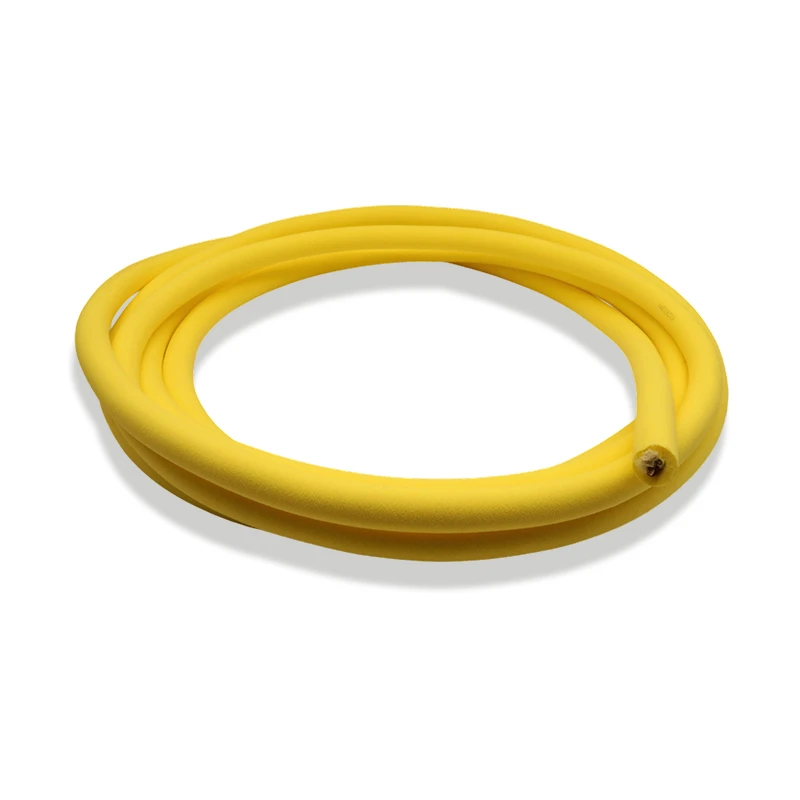
面向ROV/AUV、海底传感器、海洋机器人与水下通信系统的高性能中性浮力复合缆,单缆集成可靠供电与高速数据传输。电源采用2×2.5mm²裸铜导体,低电阻且柔韧性好,数据对为ATS 1×2×28AWG双绞(用于RS-485等信号),PE绝缘;
| Model number | PDK81601-2*2.5+ATS(1*2*28AWG) |
| Specification | 2*2.5+ATS(1*2*28AWG) |
| Conductor material | Pure copper |
| Insulation material | PE |
| Sheath material | Thermoplastic Polyurethane (TPU) |
| Sheath outer diameter (mm) | 13±0.5mm |
| Sheath color | yellow |
| Temperature range | -40-105℃ |
| Water pressure resistance | 10MPA |
面向ROV/AUV、海底传感器、海洋机器人与水下通信系统的高性能中性浮力复合缆,单缆集成可靠供电与高速数据传输。电源采用2×2.5mm²裸铜导体,低电阻且柔韧性好,数据对为ATS 1×2×28AWG双绞(用于RS-485等信号),PE绝缘;经TPU/PUR发泡构造使整缆密度匹配海水,零净浮力悬浮于水柱中,消除对载具的流体抬升或拖曳,显著改善机动性、定位保持与作业航程。TPU护套耐水压10MPa、耐温-40~105℃,抗腐蚀耐磨,规格可定制。
This product is a high‑performance neutrally buoyant composite cable specifically designed for underwater Remotely Operated Vehicles (ROVs), Autonomous Underwater Vehicles (AUVs), subsea sensors, marine robotics, and underwater communication systems. It integrates reliable power delivery and high‑speed data transmission in a single, compact jacket, while maintaining precise neutral buoyancy in seawater and outstanding flexibility, corrosion resistance, and mechanical durability.
Model number
PDK81601-2*2.5+ATS(1*2*28AWG)
Specification
2*2.5+ATS(1*2*28AWG)
Conductor material
Pure copper
Insulation material
PE
Sheath material
Thermoplastic Polyurethane (TPU)
Sheath outer diameter (mm)
13±0.5mm
Sheath color
yellow
Temperature range
Water pressure resistance
10MPA
Unlike standard underwater cables that sink to the seabed and create drag, snagging, or entanglement hazards, this cable is engineered to remain suspended in the water column with zero net buoyancy. By matching its overall density to that of seawater through a specialized TPU/PUR foam construction, the cable eliminates hydrodynamic lift or drag on the vehicle, significantly improving maneuverability, station‑keeping performance, and operational range, especially in currents or deep‑water deployments. The design reduces tether tension and cable fatigue, extending both the cable's lifespan and the underwater vehicle's effective mission duration.
Key Construction & Features:
Composite conductor set: 2×2.5 mm² bare copper power cores (low resistance, excellent flexibility) + 1×2×28AWG twisted data pair (for RS‑485, CAN bus, or 100M Ethernet)
Insulation: Polyethylene (PE) – extremely low water absorption, high insulation resistance, stable electrical performance even after long‑term immersion
Shielding: Al foil + tinned copper braid (dual‑layer composite) – provides exceptional EMI/RFI rejection (>75 dB attenuation) for reliable sensor and video signal integrity alongside power lines
Sheath: TPU (Thermoplastic Polyurethane) – superior abrasion, seawater, oil, and microbial resistance; remains flexible in cold water and tough in deep‑sea environments
Neutral buoyancy design: Density precisely matched to seawater via TPU foam technology – no flotation aids required, no sinking, no surface floating
Ideal for:
Observation‑class ROVs, mini‑ROVs, and underwater drones requiring zero‑drag tether with both power and data
AUVs and marine robotics for subsea inspection, mapping, and surveillance
Underwater camera systems and live video streaming (supports low‑latency data links)
Subsea sensor arrays, data acquisition systems, and oceanographic monitoring stations
Sonar systems and towed arrays requiring precise depth alignment and vibration damping
Shallow‑water monitoring, aquarium systems, and swimming pool cleaning robots
Military and defense applications (mine detection, naval surveillance, harbor security)
Marine research and exploration equipment, hydrographic survey systems
This cable simultaneously meets the demanding requirements of underwater equipment for reliable power distribution, high‑speed data transmission, real‑time video, sensor telemetry, and control signals, while the neutral buoyancy design eliminates the need for additional flotation devices or complex tether management systems. The lightweight, flexible construction reduces drag on the vehicle, prevents snagging on seabed obstacles, and ensures smooth deployment and retrieval from winch systems.
